English
 Українська

How Crystals Are Grown, New Materials Are Created, and What Detectors “See”: Students of Karazin University Visit SSI.
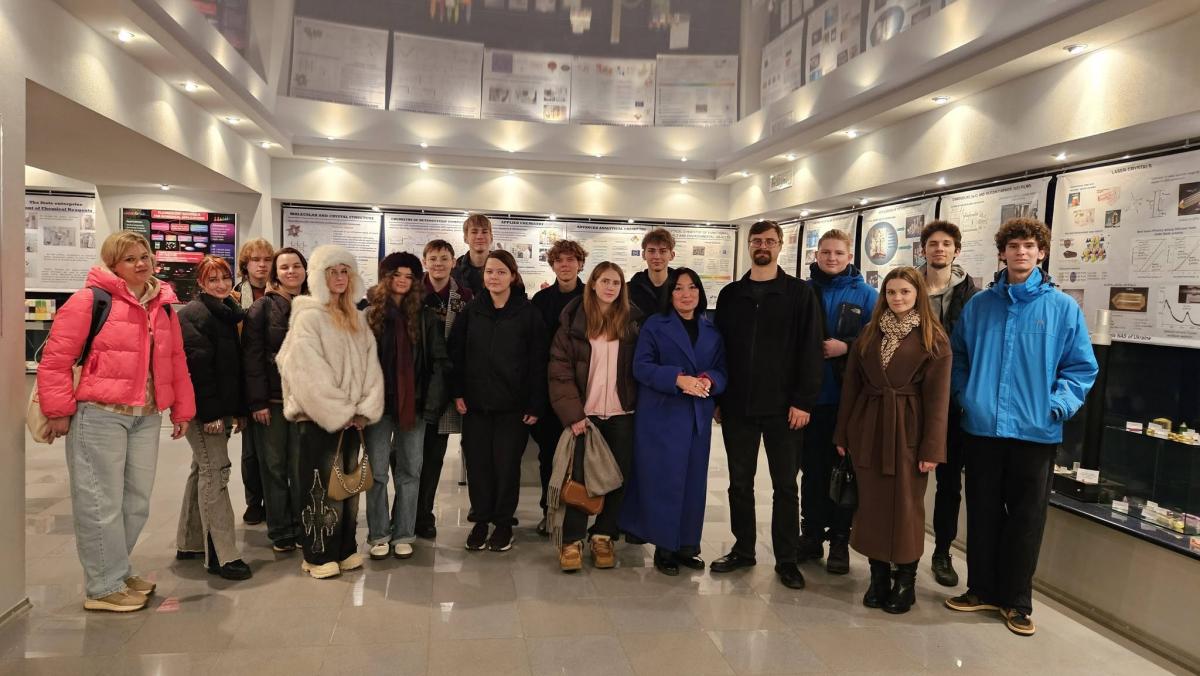
How can a crystal with specific properties be grown? How does a scintillation detector help study processes that cannot be observed directly?
Students majoring in physics at V. N. Karazin Kharkiv National University explored how these technologies work in practice during their visit to SSI "Institute for Single Crystals" of the NAS of Ukraine on November 13.
The visit began with an exhibition of scientific and technological achievements. Deputy Director of Science of the ISM, associates of the NAS of Ukraine Oleksandr Sorokin, introduced the students to the history of SSI, its scientific traditions, international research projects, main research areas, and the latest developments currently being pursued by its scientists.
The next part of the visit offered students an opportunity to explore the laboratories of the Institute for Scintillation Materials of the NAS of Ukraine. Accompanied by researchers — Iaroslav Gerasymov, Deputy Head of the Single Crystal Growth Technology Department, PhD (Technology); Anton Krech, Head of Heterostructured Materials Department, PhD (Technology); and Deputy Director of Science of the ISM, associates of the NAS of Ukraine Oleksandr Sorokin — they visited experimental and technological facilities, observed the crystal growth process, and learned how scintillators and detectors work. They also discovered how these instruments make it possible to obtain information about physical processes that cannot be observed directly.
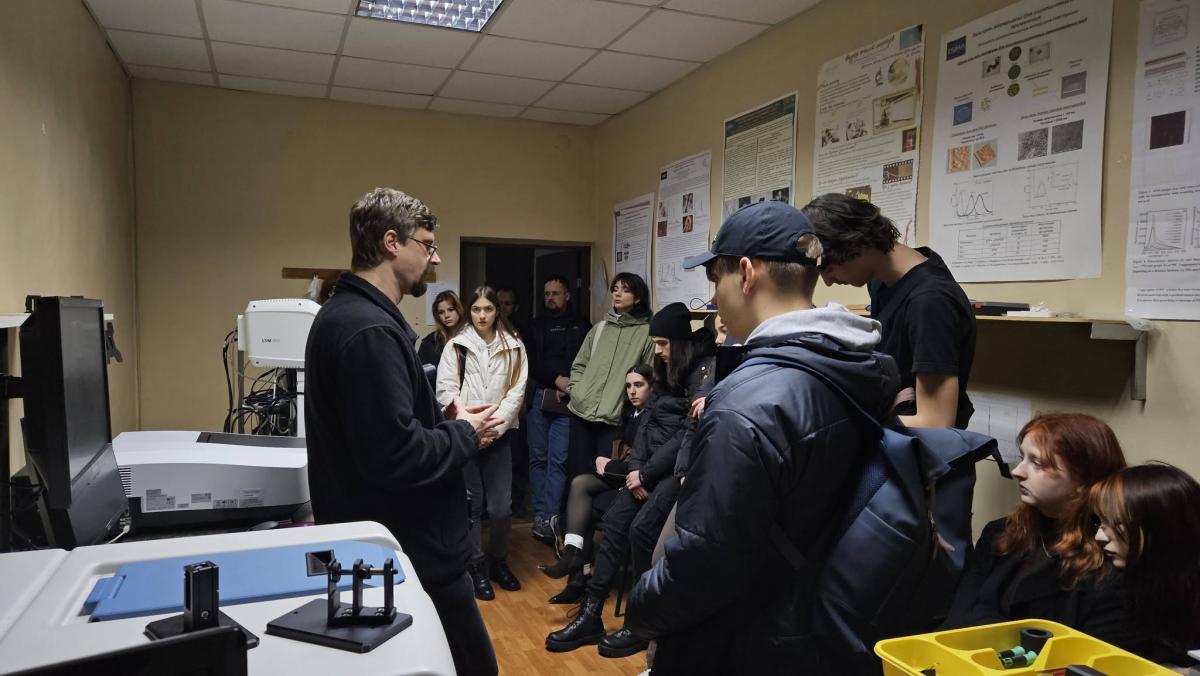
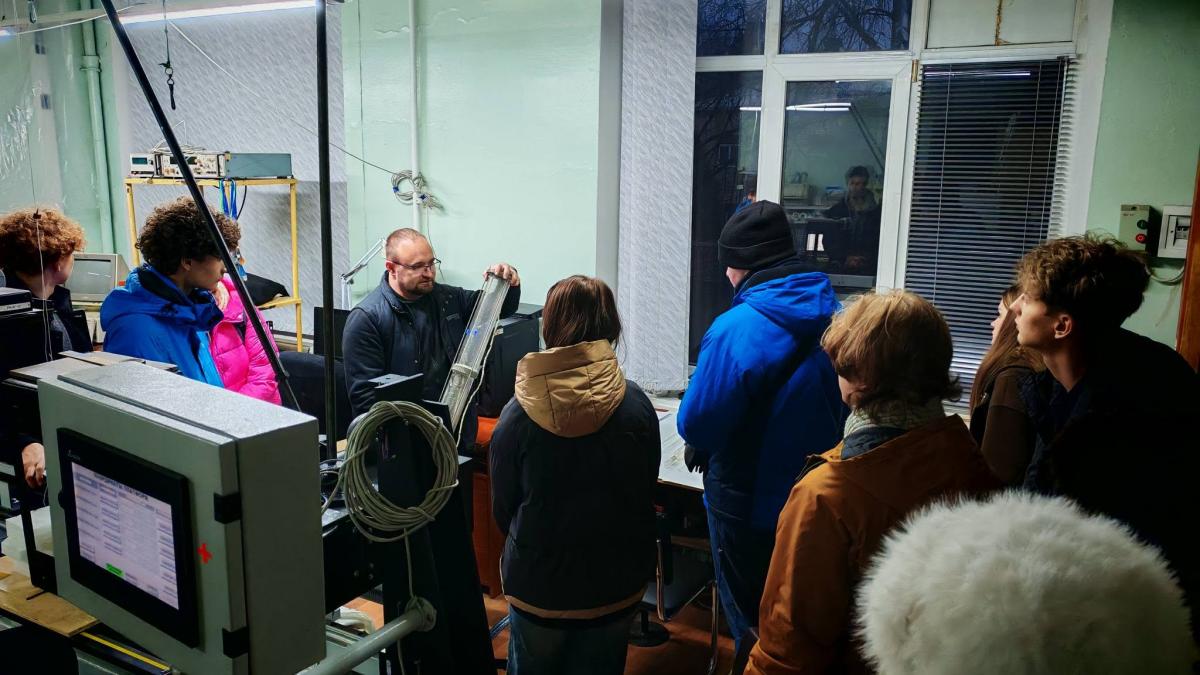
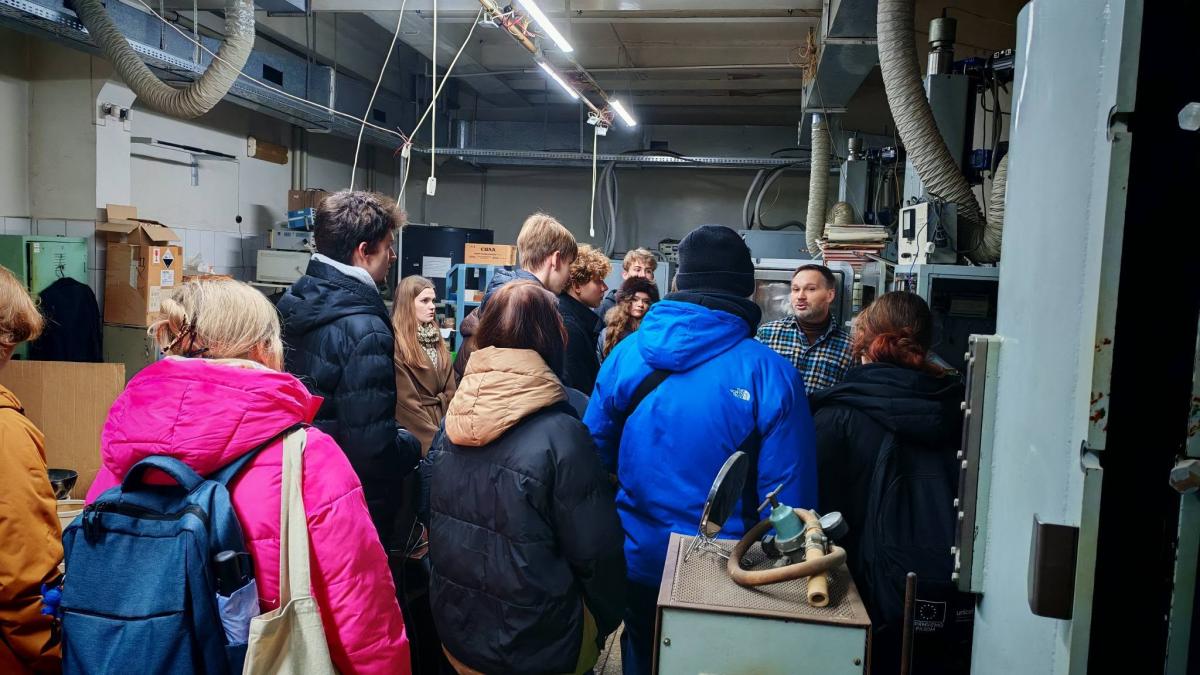
Seeing science "from the inside," exploring laboratories, talking to researchers, and asking questions is a completely different experience from learning about scientific topics solely through textbooks. Such meetings help students gain a better understanding of how research is conducted in practice and discover opportunities for their own professional development.
We thank the School of Physics at the V. N. Karazin Kharkiv National University for its interest in the work of SSI, and our researchers for their engaging presentations, which gave young people an opportunity to gain insight into the work and achievements of modern science.
We hope that the visit was not only informative but also inspiring.
Photos and materials: ISM Facebook page.