English
 Українська

Nanotechnologies for Veterinary Medicine: SSI Co-organizes the International Scientific and Practical Conference "Nanotechnologies in Animal Reproduction and Veterinary Medicine"
How can veterinary medicines be made more effective? Can nanomaterials help address challenges in animal reproductive medicine? And how can we ensure that new developments are safe for animals, humans, and the environment?
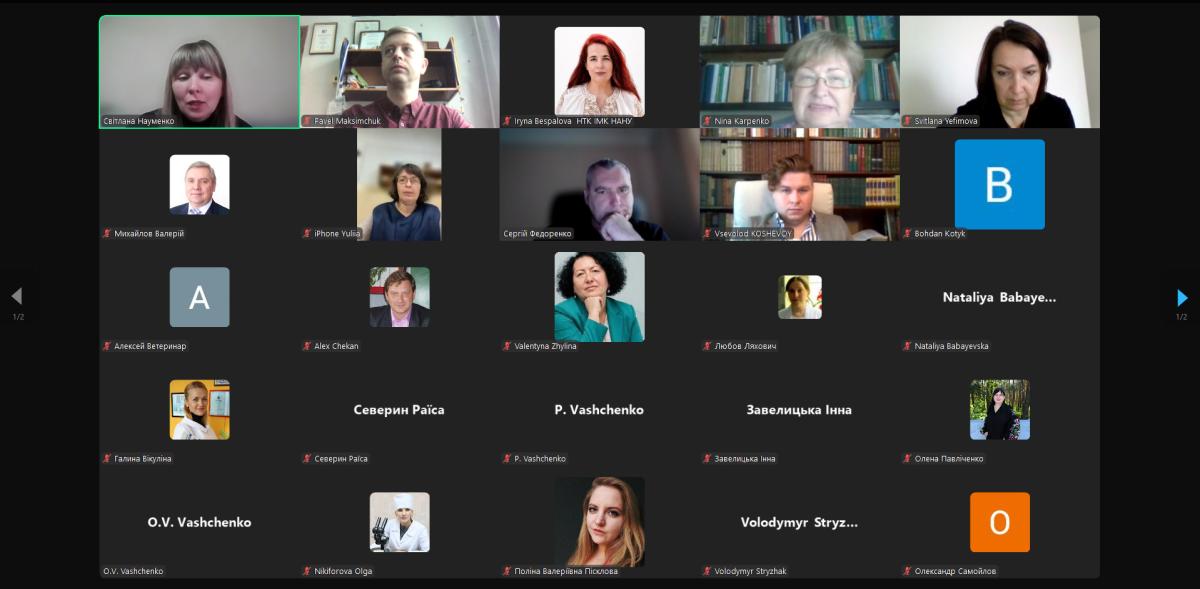
These questions were at the heart of the International Scientific and Practical Online Conference "Nanotechnologies in Animal Reproduction and Veterinary Medicine", held on October 15–16, 2026. One of the co-organizers of the event was SSI "Institute for Single Crystals" of the NAS of Ukraine. The conference was held online in Ukrainian and English.
The conference was organized by the Ministry of Education and Science of Ukraine, State Biotechnological University, National Academy of Sciences of Ukraine, SSI "Institute for Single Crystals" of the NAS of Ukraine, Institute for Scintillation Materials of the NAS of Ukraine, National Academy of Agrarian Sciences of Ukraine, and NSC "Institute of Experimental and Clinical Veterinary Medicine" of the NAAS of Ukraine, with the participation of international partners.
The event brought together scientists working toward a common goal: to explore new opportunities for veterinary medicine and animal husbandry while ensuring that the safety of these developments is scientifically substantiated.
The co-chair of the Organizing Committee was Vice-president of the NAS of Ukraine, General Director of the SSI, Academician of the NAS of Ukraine Volodymyr Semynozhenko. Academic Secretary of the SSI, Doctor of Technical Sciences Iryna Bespalova, and Head of the Yu.V. Malukin Nanostructured Materials Department of the Institute for Scintillation Materials of the NAS of Ukraine, Corresponding Member of NAS of Ukraine Svitlana Yefimova, also contributed to organizing the conference.
The conference program covered a wide range of topics, from the development of nanomaterials with tailored properties to their investigation and application in veterinary medicine and animal reproduction. Participants also focused on preclinical studies, nanomaterial safety, and the potential use of nanomaterials in veterinary medicines and feed additives.
One of the key topics was research at the intersection of nanotechnology, biology, and veterinary medicine. In particular, our scientists at the Institute for Scintillation Materials of the NAS of Ukraine, together with specialists from State Biotechnological University, are working on the development of veterinary medicines using functional nanomaterials. Plenary presentations by representatives of both institutions were dedicated to these developments.
Combining expertise in nanotechnology, biology, and veterinary medicine helps bring fundamental research closer to the practical needs of animal husbandry.
The conference brought together researchers and specialists from Ukraine, Poland, the United States, Spain, the Czech Republic, and Ireland. A highlight of the event was an interdisciplinary seminar dedicated to the development and implementation of biologically active nanomaterials based on rare-earth element vanadates.
The advancement of nanotechnology in veterinary medicine is an example of how combining fundamental science, university research, and practical experience can contribute to the development of new veterinary products, the preservation of animal reproductive health, and the strengthening of Ukraine's food security.